
Feasting on Hope: Sacraments, Trauma, and Formation in the Church (Hannah King) Ep. #217
Episode Summary
Is communion just a symbolic snack—or a mysterious, formative act of grace? In this intimate and powerful episode, Rev. Hannah King, an Anglican priest and author of the upcoming Feasting on a Hope: How God Sets a Table in the Wilderness, joins Dru Johnson to explore why the Lord’s Supper is essential for the Christian life.
Hannah shares her journey from evangelical church spaces into Anglicanism, unpacking how the Eucharist re-centered her understanding of salvation as bodily, communal, and ongoing. She shares deeply personal stories—of trauma, grief, and healing—that reveal how the sacrament offers more than information: it offers union with Christ.
Together, they tackle difficult questions: Will weekly communion become rote? Why is the Eucharist so often sidelined in modern worship? What do we gain when we treat the Table as the center, not the add-on? And how does this sacrament speak to survivors, children, skeptics, and the spiritually weary?
Hannah reminds us that even when we feel nothing, the Table is still doing its work. Like Sabbath and marriage, it shapes us slowly—but surely.
Chapters
00:00 Understanding Barriers to Worship
03:06 The Role of Liturgy in Worship
06:14 The Nature of Worship Experience
08:58 Structure of Anglican Worship
12:11 The Importance of the Eucharist
15:07 Embodied Faith and Redemption
22:21 Exploring the Nature of the Soul and Body
24:40 The Familial Nature of Faith and Community
26:20 The Dynamics of Church and Class
28:12 Rituals, Liturgy, and Their Impact on Worship
30:31 The Eucharist: A Meal of Fellowship and Equality
35:18 Embracing Mystery in the Lord’s Supper
39:25 The Centrality of the Eucharist in Christian Worship
Transcript
Dru (00:00)
Should Christians take communion every single week or will it become a meaningless exercise if we do? Join me this week with Hannah King, a priest or pastor in the Church of the Anglican Church, the Church of Anglican, no, the Anglican Church, as we talk about her book that’s coming out in February, but she talked with us now about how she conceives of the sacrament, how she thinks it actually reaffirms that we are embodied.
and that we look forward to embodied resurrection and all kinds of interesting questions. I put the hardball questions to her and she did pretty well answering them. So stay tuned.
Dru (00:40)
What things do you think get in the way of people understanding what’s going on with?
communion, the Lord’s upper, Eucharist, what have you. What are mental or conceptual or theological or just maybe biographical roadblocks for people?
Hannah (00:56)
Mm-hmm. I think for some people it’s an interesting question because our church has just entered the Anglican tradition in the last handful of years. ⁓ My husband was hired to be their first sort of Anglican priest, you know, pastor. For some people I think the idea of doing the same thing in the same way every week is an obstacle. ⁓
Dru (01:21)
Mm.
Hannah (01:23)
Or even if it’s not an obstacle consciously, it can be easy to, you know, think, this is rote and I’m not really paying attention or this is getting boring. You know, I think that can be an obstacle. I also think, you know, I’m a mom of young children and sometimes just getting through church with kids can be an obstacle to like really entering into what’s happening. But I also think, you know, on that note,
the sensory and interactive component of the Lord’s Supper can also be an on-ramp to young children, parents of young children, ⁓ people who need to get out of their heads. We are doing the same thing every week, but we’re doing something. We’re getting up and we’re going forward to receive ⁓ the bread. So I think it’s the challenge of worship.
No matter how you’re doing it of being present to what you’re doing. ⁓ but there being multiple on ramps for that along the way.
Dru (02:31)
Yeah, it’s funny. ⁓ Our kids, you we’ve been in quite a few churches in four different continents and ⁓ over the years with our kids and it was the most highly liturgical church that we went to, Church of Scotland Church in Jerusalem, in Israel when we lived there, that two of my children really connected deeply. ⁓ Because it turns out like just, I would say neurologically,
Hannah (02:51)
Wow.
Dru (03:00)
They weren’t into any chaos. So having something to read in front of them and work through was really settling for them. so it just reminded me that people come with all kinds of ⁓ bodies, all kinds of needs to each worship service. And even as children, that was what did it for two of them. The other two were just spaced out. Yeah, some of the time, not all the time. ⁓
Hannah (03:06)
Hmm.
Sure.
Dru (03:29)
This issue of rote, ⁓ so I think this is a very interesting issue, and obviously I was telling you, I was a pastor of a charismatic church. ⁓ I was one of the pastors, I wasn’t the pastor, thank goodness for them. ⁓ And this was an issue, for a lot of them, they came out of the Catholic churches, they would say, or they came out of the Wesleyan or Lutheran tradition, became a Christian in the Jesus movement, and that was the number one thing they cited when it came to… ⁓
the Spirit’s movement in the church was almost as like the Spirit can’t move in old dead practices. So I’m sure you’ve heard this before. How do you deal with that?
Hannah (04:04)
Mm-hmm.
I think sometimes I start with something I’ve heard you say before that actually every church to some extent has a liturgy that they’re performing by rote. It’s just how conscious are we of the liturgy that we’re entering into. And I think for me, the way I would encourage people is to understand the liturgy as
You know, it’s not just content that we master and move on from, which I think is maybe some of our default about discipleship and learning. It’s more about the same content that we enter into more deeply each time, you know, which is the gospel. We never graduate from the material of the gospel. We ⁓ are invited to enter into it. ⁓
But I also think what’s nice about liturgy and this is, you know, I’m speaking as someone who is sort of emotionally expressive. Like I have felt very at home in charismatic churches to be able to know that my worship is more than what I’m feeling on a given Sunday. So even if I’m there and it just, I’m just saying the stuff, ⁓ there’s pressure, a little bit of pressure.
release that I don’t have to have this incredible personal experience to it. I’m entering into something that’s bigger than me and bigger than how I’m feeling or maybe how well focused I am on a given day. Yeah, so I think that can actually be quite freeing for people who maybe have been trained to think we’ve got to find that epic worship experience to actually say, well, it’s there and you don’t have to find it.
you can just enter into it.
Dru (05:59)
⁓ to the phrase slow drip worship came to mind spontaneously. It was the spirit who brought it to mind. But that idea that worship happens is actually something that happens over time and over seasons. I think this is something ⁓ the high liturgy churches typically emphasize or bring to the fore. ⁓ And also the phrase you use more than a feeling. Maybe you didn’t say more than a feeling, but the Boston song struck up in my head, more than a feeling.
Hannah (06:14)
Mmm.
Mm.
That’s right.
I hear that old song they used to play.
Dru (06:30)
⁓
Yeah, I I think about this all the time, especially when I don’t feel it coming, you know, having become a Christian, the Charismatic Church ⁓ is just showing up to church and just singing the song and not really feeling anything. Is that worship for you?
Hannah (06:50)
So I nannied some kids when I was in college who were learning phonics in a certain way and the O-R- don’t know if this is gonna make sense or not. The O-R phonogram, er, they would say er the er of worship and your middle name is work. And for whatever reason that has stuck with me as a Christian because sometimes worship feels really
Dru (06:59)
I did not expect this direction.
Hannah (07:18)
good and it feels fulfilling and it feels like we want it to and I think that’s kind of an evangelical expectation. But sometimes worship feels like work. So I do think on the Sundays when I, you know, go home and I’ve been sweating through church because my kids are crazy and I’m not sure I quote unquote got anything out of it. I thought my worship is my offering to God. It’s work. And so yeah, I do think the days that I show up.
and I don’t feel anything, it is worship. But I also think it’s tempting to kind of get stuck in these binaries where we think either our faith should be something deeply personal and effective, or it’s just show up and do the thing. But I think in reality, we’re hoping to experience both of those and we’re holding both of those out as a value over the course of time, like you’re describing, which I think.
We Christians talk about marriage that way as well. Like marriage is a commitment and it’s not just about how you feel romantic, but hopefully also you’re working to cultivate your friendship and your affection, you know, over the course of your marriage.
Dru (08:30)
That’s a good connection. I used to have students ⁓ who that message had been drilled into them so much that marriage is a commitment that they were actually dating people. And they’d sit in my office and go like, I don’t even really like this person, but I’ve committed to him. My parents have told me marriage is a commitment. And I’m like, no, no, no, no, you’re supposed to feel something too. You need to feel something, right? It’s got to be both and. ⁓ When it comes to, well, maybe you can explain for people who just don’t know.
Hannah (08:47)
Right, right.
Dru (09:13)
An Anglican service, because you’re an Anglican pastor, ⁓ how is the service structured and where does the sermon specifically fit into that structure? Because I think it’s slightly different than most people are used to from non-denominational churches.
Hannah (09:29)
Yeah, so we have sort of two movements in our worship, the Liturgy of the Word and the Liturgy of the Table. So ⁓ the Liturgy of the Word is the first movement and that’s where we have the readings. We read from usually four different passages of Scripture, the sermon and the creed. So you know could say the sermon is like the pinnacle of the Liturgy of the Word because we’re
We’re hearing it together and then it’s being expounded on and then we respond through the creed. The liturgy of the table is the second movement and coming forward to receive, to break bread together is sort of the pinnacle of that movement.
Dru (10:14)
⁓ In the Liturgy of the Word, ⁓ maybe your church and other Anglican churches, how long is that homily slash sermon going to be?
Hannah (10:24)
So ideally it’s 20 to 25 minutes. ⁓ I say ideally because, you know, most preachers love to talk and sometimes we go long. But, ⁓ you know, I think, so I was trained in a Reformed seminary where I think the sermons were 45 minutes, kind of on average.
Dru (10:28)
Okay.
to get all three or five points in. Yeah. Yeah.
Hannah (10:49)
Right. ⁓
You know, you’re spending 20, maybe 30 hours a week preparing that sermon and just the pressure ⁓ can be profound ⁓ if that’s the expectation. So I think I was really refreshed by shorter sermons and acknowledging this is still extremely important, but ultimately where we’re leading people in worship is not to
Dru (11:01)
Hmm.
Hannah (11:18)
the reception of content, but it’s to an encounter with Jesus, an embodied encounter with Jesus in the Eucharist. So knowing that the sermon is part of how we’re discipling people, but it’s not the most important part of how we’re discipling people.
Dru (11:34)
⁓ We went to an Episcopal church for a little while in Newark, ⁓ which we had to quit going to because the incense was too intense for me. I can’t handle incense. ⁓ But it was a very high church, ⁓ and they sang the gospel reading, right? So you knew when you were reading Old Testament or an epistle because it was just a normal reading. And then when the gospel came out,
Hannah (11:44)
Okay.
Mm-hmm.
Dru (12:02)
it was clearly an elevated, know, it came, you he holds it above his head and the smoke goes out before it and that kind of thing. Do you have similar practices with the gospel readings?
Hannah (12:11)
We don’t sing it, but most Anglican churches I’ve been in do process the gospel into the congregation and people stand. And I think of that moment as sort of like an immersive theater experience where the word became flesh and dwelt among us. And so, you know, here is Jesus coming out among the people. And it…
Dru (12:30)
Mm.
Hannah (12:38)
It’s not a way of saying the gospels are more important than the rest of the Bible, but it’s saying here’s a moment when ⁓ in history, you know, the Word moved into our neighborhood.
Dru (12:49)
Hmm. That’s a very nice reading of it. I’d never heard that. I always thought, this is just reinforcing Marcionism, the Old Testament. Like, we kind of have to read the Old Testament because, you know, it’s Jesus’ scripture, but here’s the real stuff. Yeah. OK, so if that’s the case, that two movements, ⁓ I assume that you have the Eucharist every single weekly worship service. Is that correct? OK. ⁓
Hannah (12:56)
Right?
Mmm.
Right.
We do.
Dru (13:18)
What would be your advice? I’m not co, we have not discussed this previously for everybody who’s listening, so I’m not coaching her, but what would be your advice for people? I’ve been in many churches where they do once a month. We were in a Brazilian church for 13 years and their reason for doing it once a month was a lot of them came out of Brazilian Catholicism or they, that was like the boogeyman theologically for them. They said, well, if we did it every week, that would be like doing mass and that just triggers people. So we’re to do it once a month to be faithful, but not.
Hannah (13:37)
Hmm. ⁓
Hmm.
Dru (13:48)
be like the Catholics. ⁓ What would your advice be for why doing it once a week might be a good idea for all churches? Despite the logistical, I think a lot of people are like, ⁓ it’s technically problematic and.
Hannah (13:59)
Right.
Yeah, I think I would say that, um…
A, pedagogically, it’s very formative for people to have that embodied component of worship and to remember that ultimately what I’m doing in the Christian life is not just getting information, but it’s having union with Jesus. I think that’s one of the, I think the Lord’s Supper is one of the best ways to help people.
Dru (14:21)
Mm-hmm.
Yeah.
Hannah (14:38)
understand that and practice it. ⁓ That’s a big reason why I actually became Anglican. But I also would say that it reminds us of ⁓ what worship is in that, you know, we gather together as God’s people to enjoy fellowship with Him, fellowship with each other, and to receive our daily bread. And we’re then sent out.
you know, with that fullness to feed others. And so I think, you know, yeah, saying, it may not be special anymore for people to say that it’ll get, it’ll feel too normal. Like, well, it’s actually, it is normal, you know, it’s, it’s the daily, the regular sustenance that God gives us. He gives us himself. And we need that every single time that we come into his presence.
Dru (15:32)
Yeah, it’s bizarre how the reasoning can quickly, you you can quit trying to make coherent statements in your head, right? So you can say things like, it won’t feel special if we do it every week. I’m like, does it feel special every time you kiss your spouse? You know, which is actually hugging and kissing your spouse, acknowledging their presence when you come and when you go for the day. It’s turned out to be strongly correlative to ⁓ how long marriages last, right? And how committed spouses are to each other.
⁓ So yeah, I think there’s kind of that formative aspect, like can something be formative? I mean, I have deep questions about this, like can something be formative if you’re only doing it once a month? Can it be, if it’s meant to be formative, can it be formative if you’re only doing it once a week, quite honestly? I mean, there’s an argument, you know, that old joke that when the pastor says, okay, well, we’re moving on to the next chapter of the book we’ve been studying, and everybody goes like, what book have we been studying? You know.
Hannah (16:11)
Mm.
Dru (16:28)
Because it’s only once a week and you’re like, I don’t remember what we’ve been talking about. We’ve been doing 32 weeks on Romans or whatever, right? So maybe that aspect of like, what is actually happening formation wise for you? Like when you think about what’s going on for an individual, if they’re there with their family, if they’re there with the church family, like what is actually happening at the kind of like embodied level of formation that you think is just a fundamental good for Christians to practice?
Hannah (16:31)
Mm-hmm.
Well, I just wrote a book about this ⁓ and it has 10 chapters. So what I did was I thought about, know, as a Christian, how has the Lord’s Supper formed and informed my faith? How has the Eucharist helped me to understand the gospel, you know, through these different angles? And so ⁓ I could pick one of the I mean, I think
Dru (16:58)
Yeah.
Hmm.
Hannah (17:22)
A big one for me was, I’ve already kind of alluded to it, but encounter and union as the ultimate sort of telos of Christian faith. So I’m not just as a disciple learning stuff about God, but I’m being invited to enter into an intimate relationship with Him. And that’s where this whole thing is headed, you know, at the end. ⁓ It really gave my body back to me as, you know, the… ⁓
the object of God’s salvation, so I’m not just being saved in my brain and in my ideas, but I’m being saved as a whole person. ⁓ I think that’s a really important way that Christians can find a lot of healing and integration in their faith.
Dru (17:57)
Hmm.
Yeah, can I, just because that’s such an important point and I think people might miss it if they don’t know what you’re talking about, could you unpack that just a little bit? Because I think that’s a fantastic point.
Hannah (18:18)
Sure. Yeah, I mean, I think growing up evangelical, I knew that ⁓ thinking the right things about God was important. And I also had, honestly, a pretty poor eschatology, a sense of, well, when I die, my soul will go to heaven and I’ll be with God in this kind of celestial place. And actually, so my father died when I was a teenager and I even wrote a
an article about this, you know, in my teens, it was like the part of my dad that could be saved was saved. His soul, even though his body is dead. You know, that was the version of Christian hope that I had as a young person. I raised in the church. ⁓ And so when I sort of rediscovered the bodily resurrection and the renewal of all things, I thought, where has this been in
Dru (18:57)
Yeah.
Hmm.
Hannah (19:16)
you know, Christian teaching and worship. ⁓ And I think the Lord’s Supper helps us to get there because ⁓ it’s a ⁓ worship practice that feeds our bodies, not just our minds. ⁓ And also it’s Jesus giving His body to us to restore and to raise our bodies. So there’s like this little taste of resurrection, you know.
that we’re feasting on at the table. On a more personal level, I’m also, like many women, survivor of childhood sexual abuse. And so I sort of baptized my own disassociation from my body because of trauma with this sort of Christian theology. And it was at the Lord’s Supper that God began kind of exposing that and saying, ⁓
actually your body is part of what I’ve come to redeem and to restore. And I also, as your Lord, I also have suffered in my body and have been violated. And so it kind of ⁓ helped me to go to those dark places in my own healing with Christ. ⁓ And yeah, I think there can be some really, really powerful places for people to… ⁓
sort of bring their bodies into the conversation about redemption at the Lord’s table.
Dru (20:48)
Yeah, man, that’s so powerful. ⁓ Did you happen to hear, Aaron Himes, we did a two-part series on Onscript on Christ’s sexual, yeah, so the sexual assault of Christ and how sexual assault survivors can, Aaron wrote a beautiful, tear-jerking paper, but a very poignant paper on this point. ⁓ And until you just said it now, I don’t think I’d ever connected.
Hannah (21:01)
.
Dru (21:14)
a trend that I’ve seen with both men and women who have ⁓ sexual assault in their background or sexual traumas is this kind of bent towards high spiritualism, ⁓ like ⁓ a non-embodied spiritualism. ⁓ And I had never put those two things together. So thank you for helping me think about that. And then I was also thinking, well, what would it look like if Jesus was really
Hannah (21:25)
Mmm.
Dru (21:43)
If Jesus was really setting up rituals for the soul, what would the rituals look like? You can tell I’m like cooking a book in my head here. So yeah, I’m thinking, let’s see what you come up with. My thought would be he probably would do something more like a Brahmanistic guru, know, meditate on these principles. If it was really about the soul and getting the soul in order, then meditate on these principles. Although he does encourage people to do the
Hannah (22:05)
Mm-hmm.
Dru (22:11)
Psalm one practice of meditating on the Torah and God’s instruction day and night. Yeah, what would that for you get any ideas? like, I do not prepare my guest everybody who’s listening. So this is a real question in the air. If it was just about our souls, what would the rituals be? Almost like self ablating, you know, like something to get us almost like a Brahminist get away from the body kind of rituals. That’s what I’m thinking.
Hannah (22:15)
Mm-hmm.
You
If it was just about our souls, what would Jesus have
Yeah,
yeah, it’s hard to really conceive of a soul apart from a body because do we have those, you know, or is that not the way it’s supposed to be?
Dru (22:41)
It is, isn’t it?
It is really, I find it very difficult to think about those two separated. ⁓ And the fact that this is eating as well, like you said, ⁓ that Jesus takes Passover, which is a once a year ritual. Again, it’s meant to be formative, but it happens once a year. And so it has this very heightened place in Jewish ⁓ liturgical tradition. And then he says, yeah, do this often.
Hannah (23:10)
Mm-hmm.
Dru (23:11)
⁓
So it does seem to be intentional that it is Formational and that formational and the fact that it’s not once a year, but it’s now very often and takes ⁓ Ritual bathing which would have been often and moves it into a once-in-a-lifetime ⁓ Activity ⁓ Okay, I’ve got myself so sidetracked with your thoughts here. Yeah
Hannah (23:26)
Mm-hmm.
Let me, let me say something about the once a year
and regular, cause I was struck by that in the podcast you sent me. ⁓
Dru (23:43)
Okay. Yes, I made
her listen to me talk about this first.
Hannah (23:47)
⁓
which was helpful. ⁓ And I wondered if, you know, maybe one of the reasons why he reordered them that way is because it helps us to understand the familial nature of our faith. know, baptism is being born into the family and then communion is that regular table fellowship. ⁓ That’s just a, you know, totally
Dru (24:10)
Hmm. I like that.
Hannah (24:13)
random thought. The reason I bring that up is because another sort of set of chapters that I wrote about that’s really shaped my faith ⁓ is how, you know, the Lord’s table makes a family. ⁓ And so I think that’s another way that Christians can really enter into the true nature of our faith more deeply is that this is not just a me and Jesus
experience, but it’s an us and Jesus experience. You know, the nature of Christian faith is corporate and communal. ⁓ And, you know, I did experience a lot of family loss and brokenness in my childhood, and it was the family of God that really helped raise me, helped keep me in the faith, honestly helped keep me alive through my teen years. So I feel very strongly about ⁓ helping Christians to understand
what a gift it is that we have each other. And that’s a messy gift. You the church is very dysfunctional and broken as well, but ⁓ that’s part of the mystery that we’re working out together, you know, around the table.
Dru (25:21)
Yeah, the church is a motley crew, isn’t it? ⁓ And even thinking about the early, early practice of ⁓ the Lord’s Supper in ⁓ the Roman church, at least that we know of, is one of the most scandalous things about it. Again, we just get this in tidbits from various reports. But one of the most scandalous things about it is it’s cross-gender, it’s cross-class, the richer eating with the poor, which is actually probably the most offensive thing about it. ⁓
and it’s done in secret, which makes it ⁓ problematic in Roman society because they think it’s a bloodletting cult or the rumors spread. But that idea that it crosses all the normal boundaries of relations that are set up, that are stratified by societies. That said, here’s my Anglican very hot take, so you push back. ⁓ I do find that there is a certain kind of church that goes Anglican. ⁓
Hannah (26:20)
Mm.
Dru (26:21)
and it’s typically not a low church charismatic congregation. It is typically like the more PhDs you have in a church, the more likely it is to go Anglican. So do you think there’s a correlation there or there’s like, do you guys discuss this in your meetings? Like, hey, why is it only these like really well-educated churches that are going, or maybe I’ve got it wrong. Maybe that’s just the ones I know of.
Hannah (26:38)
you
No, there’s definitely a type, at least in American Anglicanism, you know, or there’s, yeah, you know, it’s blue blood or it’s white collar, high brow. ⁓ And I’ve wondered a lot about why that is because I don’t think it’s just that it’s liturgical and sacramental because if you look at the Catholic Church, it’s extremely multi-ethnic and it’s not just, you know, eggheads.
right, who are really entering into the sacramental life. So I wonder how much of it has to do with like American history even, but I will say at the church we’re serving now, when the church became Anglican, I sort of expected it to begin drawing those sort of stereotypical liturgical types, and it has some, but it’s also been drawing ⁓
families
who maybe don’t have any dog in the fight about church traditions or you know, theological terms. They’re just, this is a local church and my child can participate in worship with me. There’s a few minutes where my kid gets to go to Sunday school and I can listen to a sermon ⁓ and not too long of a sermon, you know. So I think that ⁓
Dru (27:50)
Mm-hmm.
Hannah (28:12)
sacramental worship can draw people who are really into the ideas and the history, but it can also draw people who ⁓ just know how to come forward and eat a piece of bread and that be a part of their faith.
Dru (28:29)
Yeah, it’s funny. mean, so one of my concerns with rituals and liturgies is always who is scripting them and to what end. ⁓ so, you know, well, let’s just be honest, the Anglican Church, the liturgy is scripted by the Church of England in some ways. It’s been highly formative, right? And we say the history of it, but the history really only goes back only a few hundred years. ⁓
And maybe I lived in Israel too long, but I’m like, it’s only 600 years old. That’s not very old, right? It’s like 2000 years old. That’s kind of old, but not really. 4000? OK, now we’re talking old, ⁓ So you know, and you do have to, full disclosure, I work for a ⁓ Church of England ⁓ institution in the UK. ⁓ But in your liturgy, you say, God save the king or God save the queen.
that seems to like cross over into a ⁓ new boundary for a lot of Christians, especially in America. Ironically, you know, there’s been this surge of Anglicanism in America, ⁓ which makes me think that the point you’re making is, yeah, that’s not what’s drawing people. ⁓ It’s actually the contact with the rituals, the homily, the way that it’s actually structured. The liturgy of the church is actually probably doing more work than all that other stuff.
Hannah (29:38)
Mm-hmm.
I think so. I think, you know, just in general, my generation and younger is so burned out on digital, rootless, you know, choose your own adventure kind of framework for life. That’s something that just smells old, like incense looks old, you know, might be kind of crusty, like not glitzy. Yes, like, this is different. You know, this is
Dru (30:09)
Mm-hmm.
Hmm.
Right. That makes it charming. Yeah.
Hannah (30:26)
transcendent. This is, there’s something of another world here that I’m hungry for.
Dru (30:31)
Hmm. Speaking of hunger, ⁓ the Eucharist is given in amazingly small amounts ⁓ for being part of a meal in a setting where people would have been calorie starved and ⁓ in a feast in which they would have certainly been eating a ton. What do you think about handing out big chunks of bread for people to go like honk on ⁓ during the Eucharist? Real question.
Hannah (30:39)
you
I’m not opposed to it. When we first came to our church, they were using like Hawaiian rolls. And my sons were like, dang, this bread is way better than our old church. So, I mean, yeah, I think I was really interested actually in the history of this. Like, why did the Eucharist cease to be sort of like an ancient potluck?
Dru (30:59)
Okay.
Interesting.
Yeah.
Mm-hmm.
Hannah (31:25)
you
know, then there’s there’s debate about whether it ever was or to what extent it was, but a full meal in a domestic church into this more ritualized meal. sort of the best answer I could find was just logistically with the church growing so much so fast. You know, you’re not just five households sitting around a table anymore. You’re 500 people gathering and
you know, logistically that gets complicated. ⁓ So all that to say, I don’t think there’s an exactly right portion of bread or type of bread per se. You know, I think it’s more about ⁓ the table fellowship.
Dru (32:13)
Well, if that’s the case, we’re using the word fellowship, which is such a Christianese word. ⁓ It makes me wonder what you mean by fellowship, because I think most people will take fellowship to mean hanging out with other people and having some maybe fuller association with them. Are you using fellowship capital F like all of that, or do you mean like the Eucharist actually is an act of fellowship?
Hannah (32:41)
I mean, the Eucharist actually is an act of fellowship. ⁓ And so even if it is a highly ritualized, we’re filing up one by one and getting a tiny wafer, know, visibly you’re seeing person after person come to the same table and be given the same portion of Christ. And so, you know, if I’m being united with Him, so is the person behind me who got on my nerves this week.
you know, so is my child whom God has given me to shepherd. ⁓ It just helps us to realize that God is calling a people to himself.
Dru (33:21)
Hmm. That’s a very, ⁓ you have really good answers to my tough questions. ⁓ That’s a very similar argument that I’ve heard an Israeli colleague of mine make about Sabbath, is that one thing that Sabbath does is it’s the animals rest, the slaves rest, the master, I don’t know if there’s masters in ancient Israel, but everybody rests. And that actually forms a basis of like, ⁓
Hannah (33:26)
You
Mm.
Dru (33:49)
equality, like the concept of equality that just isn’t present in the ancient world outside of that one action. And that the Eucharist is bringing something like a notion of equality into the room. Or it would certainly be absent. It’s hard for Americans because equality is such a deep value that we think it just exists everywhere all the time. But that maybe even we need to be reminded of this in certain ways. What is your greatest hope? ⁓
Hannah (33:50)
Mm-hmm.
Mm-hmm.
Right.
Dru (34:18)
I’m going to be careful here. I know of churches that basically just quit doing communion ⁓ because I know of churches that said, going to study communion because we’re not sure what to do with it. And we’re going to quit doing it until we figure out what to do with it. ⁓ Yeah. That was a mild version of my reaction. ⁓ But yeah. What is your greatest hope that you think can be gained by a church, you know, who
Hannah (34:24)
Hmm.
Dru (34:46)
Let’s say they’re doing it infrequently. Like when I was in the Church of Scotland, they did it once a quarter, right? Because they want to make sure, and apparently some churches in the Church of Scotland do it twice a year because they want to make sure you’re really sorry before you do it. And we haven’t really even talked about ⁓ this loose association of repentance and forgiveness with the Eucharist, which is an interesting theological strand as well. ⁓ But what do they gain by going to fellowship?
Hannah (35:04)
Mm-hmm.
Dru (35:12)
every week, part of their fellowship, part of their worship every week. Like what’s the greatest hope that you would have for that transition?
Hannah (35:18)
I think I would hope that all of us, whether we’re Christian leaders, pastors, or Christian worshippers, that we could enter into it accepting that there’s some mystery and some…
lots that we don’t understand about it, what it’s doing for us. ⁓ I talked with ⁓ a friend when I was writing the book and he was like, well, I’ve never understood the point of the Lord’s Supper, you know? And I’m like, you know, I’m not sure I understand the point either, but we can do it anyway because Jesus told us to. And I think a lot of the Christian journey is obedience and entering in.
Dru (35:48)
Get in line.
Hannah (36:00)
And sometimes the understanding comes later.
Dru (36:03)
Mm-hmm. Maybe all the time. It’s obedience and I mean, like to make… Right, well, even saying that we should know in advance is already kind of admitting to a certain type of European enlightenment, rationalist ⁓ way of thinking about the world, that I should understand it before I do it. Maybe the hypocrisy, maybe we don’t have to point out hypocrisy, but one point of hypocrisy is…
Hannah (36:05)
That’s right. We like to think that we know in advance, but that’s
Mm-hmm.
Dru (36:29)
Most people don’t understand any of the rituals that are forming them when they first start doing them. ⁓ So just being, if you want to be rationally consistent in your life, then practicing communion, trustingly knowing that wisdom will come from it is actually more probably consistent with the rest of our lives, I think.
Hannah (36:35)
Right.
Yeah.
And I think I would say one other thing about my hope, you know, at least in the book that I wrote, is not, I hope churches will start doing communion more or in a different way per se. But my hope is more that Christians of all traditions, kind of regardless of their ⁓ traditions around the Lord’s Supper, would be able to ⁓ understand the gospel more profoundly.
through the lens of the supper and that they would just be able to appreciate and be enriched and more nurtured and nourished by the practice that they’re already doing in whatever way they’re doing it, how often they’re doing it.
Dru (37:28)
Yeah, in the lens of the supper, mean, ⁓ the idea that this is a focal point even for Jesus, right? Even if you just look at the shape of each gospel, they all kind of come down to this Passion Week, which comes to a high point at this meal, and the high point of this meal comes to this particular ritual, which would have been so important for both first century Jews and, of course, all the followers of Jesus that follow that this is an
Hannah (37:49)
Mm.
Dru (37:56)
as you point out, it’s a very natural focal point in the gospel story. ⁓ And so we’re not like inventing some weird over emphasis, know, majoring on a minor or something here, if I hear you correctly.
Hannah (38:09)
Right. Yeah, I mean, this is sort of arguably the central feature of Christian worship throughout the ages ⁓ that Jesus commanded us to do it. Also, I think this is right. The Feeding of the Five Thousand is the only miracle of Jesus recorded in all four gospels, and it has very Eucharistic vibes. ⁓ So I think. Yeah.
Dru (38:28)
Mm-hmm.
Very mana flash Eucharistic. It’s a matchup.
Yeah
Hannah (38:36)
Yes, yes. So I think just the idea of, you know, what Jesus is doing in coming to the world is saying, I’m the bread of life. Feast on me. You know, those who come to me will never die. I think we need to hear that message and we need to rehearse that message again and again and again.
Dru (38:57)
Yeah. And to your point about understanding the message, Jesus says that in John’s gospel without any reference to a symbolic ritual to get to come. He’s just like, no, you have to eat my dead flesh and you have to drink my blood. So, I mean, he’s laying it out there way before anybody understands what he’s talking about ⁓ as to see who’s going to stay around and follow him. So even that logic of you do it, even though you don’t fully understand it, but where else can we go? Cause you have the words of life, right? That kind of idea.
Hannah (39:07)
Mmm.
Yep.
Mm-hmm.
Great.
Dru (39:26)
Wow, Hannah, this is so good. What’s the exact name of the book?
Hannah (39:30)
called Feasting on a Hope, How God Sets a Table in the Wilderness.
Dru (39:35)
That was a test. OK, that was really good. That’s like naming your kids in order. Maybe you can do. Excellent. That’s with IVP. And that is out now. Is that correct?
Hannah (39:38)
It actually did take me while. like, ⁓
It actually does not come out until Shrove Tuesday next year, February 17th.
Dru (39:51)
February 17th, they have to wait until then. Where can they catch you before then? Because I know. Yeah, so where can they catch you before then if they want to hear more about this?
Hannah (39:54)
Thanks for talking to me about this six months in advance. ⁓
Well, I do have a website, ⁓ HannahMillerKing.com and that’s really just like, I don’t know, a glorified landing spot where, you know, my substack newsletters linked there and some of the articles that I write are linked there. but I like talking to people in real life. So, you know, send me a message if you want to catch me.
Dru (40:24)
Right.
Share On:
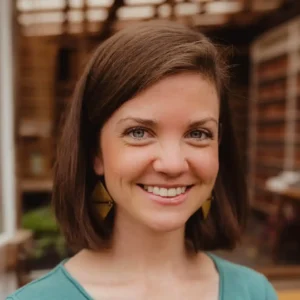
Hannah Miller King
Hannah Miller King is a priest and writer in the Anglican tradition. She has been a campus minister among conservatory musicians, an apartment minister in downtown Dallas, and a parish pastor in Northern Virginia and South Carolina. She currently serves as the Associate Rector at The Vine Anglican Church in Western North Carolina. She is a contributing writer for Christianity Today and Holy Post Media, and her work has appeared in Fathom Magazine, Mere Orthodoxy, The Living Church and Smoky Mountain News. Her first book was published by InterVarsity Press in February 2026.
Hannah holds a Bachelor of Arts in Music from Westminster Choir College and a Master of Arts in Religion from Redeemer Seminary. She is currently being schooled in the minutia of Star Wars (and other galactic battles between good and evil) by her three kids. See more from Hannah at her website (Click Here)
Most Recent Podcast Episodes


Join the Mission to Bridge Faith and Understanding
Your support fuels research, teaching, and resources that shape minds and hearts. Invest in the future of Hebraic Thought.