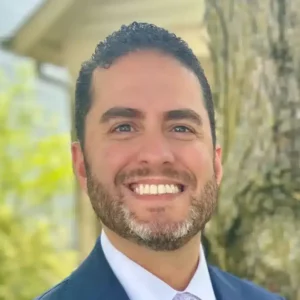
Austin Knuppe (00:00)
Yeah, so I’ve really been in both my teaching as a university professor and my practice of peace building in the field, have really leaned into or been encouraged by practices of lament. So I come from a evangelical, non denominational background in the Protestant church, which is really, at least in the white church, doesn’t have a strong tradition of lament. We we maybe know something about impregatory psalms, we maybe know about mourning or grief, but lament expressing
Grief to God about injustice in the world and demanding that he remain true to his character is something that’s pretty foreign. And so when
Dru Johnson (00:35)
Hmm.
Austin Knuppe (00:36)
I take students on study abroad to a place like Rwanda as I did this last summer, I can’t provide them a lot of clean answers as to why in this case 80, 100 million people were killed in three months. Right. But I can help model and then shape students and guest dispositions about how they approach God and then the condition of their own heart.
Dru Johnson (00:58)
Mm.
Austin Knuppe (00:58)
Those
are kind of heart, heart-based traits or dispositions. I think cognitively or intellectually, the Lord wants us to love them with our mind by being flexible, cognitively flexible, open-minded, comfortable with that dissonance, and cultivating practices of trust in who God is and trust in his character, as opposed to certainty or answer seeking.
Dru Johnson (01:21)
Mm.
Austin Knuppe (01:22)
So being able to sit in that with a degree of courage, humility,
cu curiosity is super difficult, but that’s really what I’ve been working on personally trying to model for students in the past decade plus.
Dru Johnson (01:36)
Yeah, that that is fantastic, especially because I wasn’t expecting exactly that. And if you go back, I don’t know if it’s episodes that haven’t come out yet, the topic of lament keeps coming up in all kinds of areas, which signals to me that the American church is basically and the white I church, because you’re right, in the black church you do get a stronger sense of lament in the worship, but that it’s just been something absent and now we’re realizing how we might need this, that it’s not just kind of an
Austin Knuppe (02:03)
Mm.
Dru Johnson (02:03)
add-on for those people over there.
what does it look like when people are just looking for answers and certainty seeking? Like what how does that actually manifest when they’re thinking about global conflict I mean the Rwandan genocide, right? I that’s as that’s as complicated as it gets, but what does it look like when they’re just looking for certainty?
Austin Knuppe (02:22)
Yeah, so in my context, that’s folks that study Israel, Palestine or people interested in Russia, Ukraine. In both
Dru Johnson (02:27)
Mm.
Austin Knuppe (02:28)
those conflicts, when people when they try to reduce that uncertainty, that cognitive dissonance, they’re attracted to narratives that cohere to their preexisting view of the world. And so what they do is they have this kind of gut stomach feeling about who are the good guys, who are the bad guys, what would be a just end of the conflict, what are those dynamics look like. And then we go around and fact seek to kind of fill that in.
Dru Johnson (02:50)
Mm.
Austin Knuppe (02:50)
That’s
just the way our brains work, whether we’re believers or skeptics, whether we’re highly educated or lowly educated. In fact, the folks that have the highest degree of education, the Austins and Drus of world, are most susceptible to motivated reasoning. So that’s kind of a
Dru Johnson (02:58)
Right. Right. Right.
Austin Knuppe (03:02)
point of humility, right? But we we try,
Dru Johnson (03:05)
Hm.
Austin Knuppe (03:06)
we ask questions of experts and we say, Austin, can you tell me about an expert that can that can inform me about the conflict? And then we kind of selectively sort for people that fit our own identity group, our own worldview, our own
way of seeing the world and then we appeal to expertise. So I don’t know a lot about this, but this expert said this is a way to view it. And obviously he’s a friend of Israel or he’s a friend of of Ukraine and this is what we need to do. I’m perhaps just as guilty of that as others. I try to have a a a promiscuous information diet and news diet when I approach these things
Dru Johnson (03:36)
Mm.
Austin Knuppe (03:37)
and and try to ask myself what evidence would it take or what reasons, evidence, events in the world would it take for me to change my mind? How do I know I could be wrong about this?
Another way I try to model those things for students and congregants and and friends. Yeah. No, not at all.
Dru Johnson (03:50)
Yeah. Sorry, I didn’t mean to cut you off there.
so you’ve already, just in our first few minutes, set up not a dichotomy, but a clear separation between
Lament, which is very open ended,
right?
Austin Knuppe (04:04)
Hmm.
Dru Johnson (04:05)
Even lament that ends in but I trust you got it still a pretty open ended source of of comfort, if you can call it that. And then controlling narratives, right? And so I I wonder what you see. let’s take Ukraine and Russia. what do you see as some of the like okay, when I hear this narrative, I realize that is just somebody who is trying to control the narrative in some way versus leaving open ended all the
the the loose ends and the perplexities and the things that will not get resolved in the next generation. What what indicates to you that this is a controlling narrative? And you can kind of take it from both sides if you like.
Austin Knuppe (04:44)
Yeah, I think I mean we could talk about information hygiene. I’m not really that’s not really my forte, but personally what I do is I look for people that model those dispositions of humility, curiosity, someone that can restate to the satisfaction adversary or an opponent’s point of view. Say, Drew, what I’m hearing you say is XYZ, is that correct? And then
Dru Johnson (05:05)
Mm. Mm.
Austin Knuppe (05:07)
approach and say, Okay, well here’s how I would respond. Some basic like active communication skills, people that are
that are engaging in difficult conversation in good faith. So I kind of have these heuristics or mental shortcuts I use to figure out who’s engaging in good faith, who’s engaging based on some agenda. We all have that to various degrees. And then what’s the point of view? what’s good about it, what’s bad about it, how might I respond? obviously you can use shortcuts like someone’s background, their current position, do they represent a government or not? What news channel are you on?
Dru Johnson (05:37)
Right.
Right.
Austin Knuppe (05:38)
Is this
a Twitter debate versus a in a dusty journal somewhere where people are writing back and forth?
Dru Johnson (05:43)
Right. Yeah, the the kind of the heat the heat map of the conversation as well.
Austin Knuppe (05:49)
Yeah. Yep.
Dru Johnson (05:51)
yeah, it it’s interesting that in the Gaza the Gaza Israel conversation, I
constantly hear people say, well that’s just their talking points, where they’re just hitting their talking points. And my gut reaction, maybe the philosophical side of me, is like, well fine, but is the talking point a good one or not? Like, you know, who cares if it’s a talking, you know, so so I’ve been trained in talking points. Is it a decent one? I I wonder what is the value of the kind of is there a good faith way that you can still land on the talking points?
Austin Knuppe (06:24)
Yeah, yeah. So this is this is what I would say. This is a egregious adaptation of what Martin Luther King Jr. said about judging people based on the content of their character, not the color of their
Dru Johnson (06:34)
Mm.
Austin Knuppe (06:34)
skin. The modern university adaptation of that, not to be too too flippant, is to say to judge people on the content of their arguments, not their identity or academic
Dru Johnson (06:44)
Mm.
Austin Knuppe (06:45)
signature or any of those things. Right. So I judge people based on the quality of the argument, not the fact they have letters after their name or the fact that they live in the place.
or the fact that they have that identity or passport. Right.
Dru Johnson (06:57)
Yeah, I think the yeah, I’ve noticed, and again I’m probably a little bit more in touch than with the Israel Gaza or the Israel Palestine issue, is
Austin Knuppe (07:05)
Yeah. Sure.
Dru Johnson (07:07)
there’s always this appeal to well I live there. I’m like yes, I grew up in Oklahoma, but that that that doesn’t give me the right to say everything. Although I wanna flip the script and say, look, if I’m a Ukrainian in Kyiv or Kiev or
If I’m in Gaza, I have a real as we would call existential threat facing me. Like there are people who really
Austin Knuppe (07:33)
Yep, that’s right.
Dru Johnson (07:34)
do want to kill me, right? Or
Austin Knuppe (07:36)
That’s right.
Dru Johnson (07:37)
what and even if that’s not true, it certainly feels that way, right? so it it it almost doesn’t matter because there’s lots of reasons to believe that reasonably. so how does that weight the argument, as it were? I mean, how does that make a good or bad argument?
Austin Knuppe (07:51)
Yep. Yeah,
yeah. That’s great. So I think so a couple of things. First, I think lived experience is important. As an academic and peace building practitioner, I’m super, super, super hesitant, especially in the Middle
East, to write
Dru Johnson (08:05)
Mm-hmm.
Austin Knuppe (08:05)
on places where I don’t speak the language or haven’t been on the ground. For me, the one
Dru Johnson (08:08)
Yeah.
Austin Knuppe (08:09)
exception, that’s northern Yemen. Haven’t spent time in North Yemen. other than that, the place that I write about, I know. to
Dru Johnson (08:14)
Yeah.
Austin Knuppe (08:14)
various extents. I’m I’m a a white North American, right? I’m not a not from the region originally. But speak Arabic, I’ve spent time.
That’s the first. The second is that lived experience is that is actually quite tricky because what I tell my students is that our memories are not history, and history is not the past. Okay. So I took students last July 2026 to the genocide memorial in Kigali, Rwanda. And the state narrative around the genocide was this was the Hutu genocide against the Tutsi people. Right. They said, well, there were some good Hutu, some that resisted.
Just like there’s some Germans that resisted the Nazis, but by and large, this is the official narrative. And by the way, the Rwandan Patriotic Front that liberated the country is remarkable in that they didn’t engage in retributory violence. In fact, they
Dru Johnson (09:01)
Hmm.
Austin Knuppe (09:01)
did. We don’t know if that was 20 or 30,000. But case in point, just because you have lived experience, either as a perpetrator or victim, doesn’t mean you have a monopoly on history, which is a social construction of past events, right?
Dru Johnson (09:15)
Mm.
Austin Knuppe (09:16)
Memory is just different than that. And and
And then the role of bearing witness in memory then gets a little bit more complicated, equally as important, but kind of adds some wrinkles to how we understand who are perpetrators, who are victims, things like that. That’d be the second point. The third would be another kind of mental shortcut I use is to think about is this person from their standpoint saying something that’s highly unpopular with their primary in group, the social group
Dru Johnson (09:39)
Yeah.
Austin Knuppe (09:39)
that they most identify for emotional support, for financial support, for meaning in the world, for political
support.
party affiliation, if they’re saying something that’s highly unpopular, there’s either two outcomes. One, they could be crazy, right?
Dru Johnson (09:51)
Mm.
Austin Knuppe (09:51)
The other is that they could be saying something pretty profound, especially if they’re getting flack from multiple perspectives. There’s
Dru Johnson (09:57)
Hm.
Austin Knuppe (09:58)
a fine line sometimes between people that are kooks versus people that are saying something pretty prophetic. But in the
Dru Johnson (10:03)
Yeah.
Austin Knuppe (10:03)
space, especially in Middle East politics, people that engage either scholars or practitioners or activists that tend to piss off multiple sides, I think deserve a hearing.
Dru Johnson (10:14)
Yeah.
I and you’re right. You see people out on the speaking circuit who you’re like, you know, I was raised with these people, so I know exactly how they think. Which there’s something true. I mean, this is I think what you’re saying, the curiosity is there’s something true about that. Like they you know, if you’re raised in that community, you do know something about what they think that I don’t probably cannot appreciate as an outsider. but there can also be kind of a I maybe I’m a maybe it triggers me a little bit because I hear the same thing from students who are rejecting their parents’ religion.
kind of thing. and and once you’ve stepped out, you gotta stay out and you know, and certain personalities lend towards just being the most extreme version of being out and against, right? that that might be my sinful right
Austin Knuppe (10:58)
Yeah, certainly in deconstruction I found that the folks
that deconstruct from a fundamentalist background, or that’s evangelical, Pentecostal, otherwise, tend to be the most fundamentalist in their agnosticism or atheism, just because it’s a personality profile, not necessarily a religious disposition. Yeah, that’s what I found. Yeah.
Dru Johnson (11:07)
Yes. Yeah, yeah. Yeah. It’s the same epistemology as we’d say, right? They’re using the same
methods of knowing and trusting their themselves. Yeah.
Austin Knuppe (11:18)
Yep, exactly. Yeah.
Dru Johnson (11:20)
okay, so that’s a bit about thinking about how do we take on
You know, the information that’s coming on. I mean, this is part of the problem we face in hypermodernism, as some people call it, versus postmodernism, is just an onslaught a and a morass of data, right? And a morass of talking
Austin Knuppe (11:37)
Mm.
Dru Johnson (11:38)
points and and people presenting these different sides. And again, I always, you know, kinda like with student evals, I always say, no matter how heinous the comment, there’s usually a a kernel of truth in there. Like there’s something that they’re picking up on that’s not entirely wrong.
Austin Knuppe (11:51)
Yes. Yeah.
Dru Johnson (11:53)
and so I always take it seriously, even if there’s
just being mean. like, okay, they might be trying to be mean, but they’re probably need to tell me something I need to know. So I think there’s that kind of being gracious towards whoever, you know, ki curious, I think is the word you’re using, which I think includes this, being curious to figure out what it is behind that person, even if I don’t think they’re a good representative overall.
Austin Knuppe (12:16)
Intellectual hospitality, maybe, yeah.
Dru Johnson (12:18)
yeah, yeah. Intellectual hospitality. that’s a great word. That’s a great phrase. Okay.
Austin Knuppe (12:22)
That’s not an Austin. I I forget who that that is not
original to Austin, but yeah. So I may try to practice.
Dru Johnson (12:26)
Yeah, I mean we talk about epistemic
humility, but I like that better intellectual hospitality because it acknowledges we’re always operating in an environment in a community of people and in stories, narratives, information, etc. you know, I lived in Israel for six months in Jerusalem and then traveled there fifteen, twenty times, in in the West Bank and never been to Gaza, but I’ve been to those kibbutzim down by on the edge of Gaza that were attacked.
And I felt that the longer I lived there and the more I traveled there, the less I understood everything about what was going on. and I
Austin Knuppe (13:02)
Right.
Dru Johnson (13:03)
think part of that was because everybody I talk, I would always ask people what’s your take on this, that, or the other. And it just got so much more complex and more complex. And I actually
Austin Knuppe (13:11)
Mm. Mm.
Dru Johnson (13:13)
kind of gave up having any super strong feelings about many aspects of what’s going on in Israel and Palestine.
But that doesn’t seem like a good a good attitude either. I mean I f I feel like I hit a wall where I’m just like, I will never understand what’s going on in a lot of these places. And so and I think the reason why that’s important to me is and you feel free to correct me here, as I know you will. I feel like doing justice requires a lot of wisdom
and discernment.
Austin Knuppe (13:45)
Hm,
hm.
Dru Johnson (13:46)
And
I you know, I as I’ve said many times, I we used to spend a lot of time in a housing project in Newark and I saw a lot of people who came in thinking they were doing justice, but they were just
Austin Knuppe (13:54)
Mm.
Dru Johnson (13:55)
throwing charity around and it wasn’t wise,
Austin Knuppe (13:57)
Yeah.
Dru Johnson (13:57)
it wasn’t discerning, it did no good, and it might have even done minor harm, right? Yeah, yeah, exactly.
Austin Knuppe (14:01)
When helping her, it’s that sort of paradigm. Yeah.
Dru Johnson (14:03)
Brian Fickert, who we had just a few episodes ago on this podcast.
Austin Knuppe (14:06)
Yeah. Yep.
Dru Johnson (14:08)
and so
That’s I kind of get that same feel, that vibe, when I approach something like Ukraine and Russia, which seems a little clearer to me, but that might be my own naivete. or or or Palestine-Israel. I just feel like I just really don’t know what is even a discerning inroad. I wonder if you have any markers, like waypoints to help us just think about the topic, like clear some of the clutter, I guess.
Austin Knuppe (14:35)
Yeah. well, I guess I’d I’d ask you which which one you want to focus on first or what parameters. I think in general, like what I try to model or practice is to delineate the most relevant set of questions and then outline some set of possible futures. So I do a lot of media, mostly local, some online, occasionally national spot on on conflict dynamics and peace building, what happens after the shooting stops. And what I do
Dru Johnson (14:57)
Mm-hmm. Mm-hmm.
Austin Knuppe (14:59)
is I typically lay out here are our menu of options in a place like Iraq or Syria.
Dru Johnson (15:04)
Mm-hmm.
Austin Knuppe (15:04)
what
what would it require for truth and reconciliation to happen? What are the background or pre-existing conditions you need, security, sustenance, significance, right? Those kind of key Maslows needs. And then
Dru Johnson (15:16)
Mm-hmm.
Austin Knuppe (15:17)
what are some possible futures and what evidence would I need to make the inference that that’s actually happening? So I try to kind of set here’s the basic menu of questions, here’s the evidence I need to to make up my mind. and then I point folks to other people I find reliable and helpful in the space.
And I try to really model or cul cultivate a very healthy sense of I don’t know, or I think that’s a good question. I don’t know the answer to it. And
Dru Johnson (15:41)
Yeah.
Austin Knuppe (15:42)
being okay and you know, your ego and status and the whole academic thing of just being okay saying, I don’t know, can you teach me, can you tell me where I could be wrong? Who do I need to be listening to? And also have the courage then to say, well, actually, I think that’s a weak argument for these reasons, but I the intuition’s correct.
Dru Johnson (15:57)
Hmm. Hmm.
Austin Knuppe (15:59)
So I mean we can we can approach the conflict step by step. We can ask about specific dynamics. We can get into the the policy details if you want, but that’s kind of those are the background conditions or the disposition in which I try to approach, whether it’s a five minute T V spot or an hour podcast or a three hour seminar with my students.
Dru Johnson (16:16)
Yeah. maybe let’s sidebar that conversation for a second. I wanna go back to
Austin Knuppe (16:20)
Sure, yeah.
Dru Johnson (16:21)
research that you’ve done in the field and because
Austin Knuppe (16:23)
Yep. Yep.
Dru Johnson (16:24)
I’m thinking what what are parallel models here? So you spent time in Kurdistan up in northern Iraq, on
Austin Knuppe (16:29)
Yep. That’s right.
Dru Johnson (16:31)
on the ground talking to people, interviewing people, interviewing people who lead organizations to help them.
Austin Knuppe (16:36)
Yep. Yep.
Dru Johnson (16:38)
so I wonder so conflict
ends, as it were. I mean that’s a that’s a rolling deadline in the north especially. But the conflict ends. and what are the you know, besides food, shelter, electricity, what are the the biggest problems facing the people there when it comes to just like patch and repair the relationship with their neighbors and their government, etcetera?
Austin Knuppe (17:00)
Mm.
Mm. Those are great questions. So in in kind of the conflict peace fee peace building field, we call that social cohesion. What are
Dru Johnson (17:09)
Mm.
Austin Knuppe (17:09)
the things societies need in order to repair? So in a place like northern Iraq, you have a whole litany of religious and ethnic minorities, including really ancient Christian communities, been there since Saint Thomas brought the gospel to her to Mesopotamia
Dru Johnson (17:19)
Right. Right.
Austin Knuppe (17:21)
in the third century, as the tradition says, right? But you have you have Christians that are neither Arab nor Kurdish and they’re neither Muslim nor secular.
So they’re kind of at this cross-cutting cleavage of a whole bunch of identity conflicts, political conflicts, security ones. And what I saw in Iraq, and this is the same in Syria and even in in Yemen now, is when physical violence decelerates, you still have immense, immense psychological trauma. You have suspicion, there’s zero social trust, and they’re still really
People in local communities use identity-based markers to judge whether or not someone’s a threat. So the classic really heartbreaking example would be in a city like Mosul in northern Iraq, you had a lot of Sunni Arab women and families that didn’t flee when the Islamic State then occupied their community in June 2014 forward. They either didn’t flee because they didn’t feel threatened, or they didn’t have motive or opportunity to safely exit. A lot of time people want to leave. They don’t have a secondary plan or they can’t physically leave because their moms
85 and needs a wheelchair. You can’t
Dru Johnson (18:25)
Right.
Austin Knuppe (18:26)
flee violence in the middle of the night if your kids or your parents are disabled, or if you don’t, if all your assets are like in in in farming or pastures, or you don’t have cash, but you have lots of cattle, right? So there’s plenty of reasons people can’t flee. The problem is then the people that stayed then face intense ostracism, stigmatism, real suspicion when people return. So you
Dru Johnson (18:48)
Mm.
Austin Knuppe (18:48)
can imagine people returning to Mosul after the Iraqi military liberates the city.
three, four years later, and saying, wait a minute, the Johnson family didn’t leave when ISIS came to town. You all must be collaborators.
Dru Johnson (18:59)
Hmm.
Austin Knuppe (19:00)
Right. And so the suspicion there is especially intense for women and girls who are then forcibly trafficked or married to militant fighters. Right? So the immediate inference of a lot of one’s neighbors would be obviously you’re a true believer, you married so and so, you stayed but you benefited from the occupation. Whereas the reality or the testimony, some of the testimonies I’ve received
And I have in my book, or actually I was trafficked, or my community then negotiated a forced marriage to spare them from further victimization. It was
Dru Johnson (19:30)
Yeah.
Austin Knuppe (19:31)
a very brutal, perverse version of the social contract.
Dru Johnson (19:34)
Mm.
Austin Knuppe (19:34)
Right. So that would be the case in Iraq. I think those trends would largely follow the risk of stigmatism, suspicion, rebuilding social cohesion. That would largely follow what’s happening in Syria now, though I haven’t been been on the ground
Dru Johnson (19:45)
Right.
Austin Knuppe (19:45)
to really tell you authoritatively.
Dru Johnson (19:48)
Yeah. And so that social cohesion element, like where where do you even begin? So you’re a peace and conflict expert,
and so
Austin Knuppe (19:56)
Yep.
Dru Johnson (19:57)
you you come in, or let’s just say there’s a group that is thinking about what do we do to help northern Iraq, Mosul specifically, Kurdistan. what like step number one, step number two, how do you think about helping people process their trauma and bringing back social cohesion?
Austin Knuppe (20:13)
Hmm.
So there’s the baseline. Some of the baseline conditions are people need a basic level of security in order to engage in any public forms of risk, meeting together, bearing truth, truce and reconciliation, public court proceedings and law enforcement, all those things require some basic security. You also need basic economic opportunities so you can provide for your family, right? Often that comes alongside the government or a private sector.
Or some militia or violent non-state group needs to provide basic utilities, you gotta
Dru Johnson (20:44)
Right.
Austin Knuppe (20:45)
govern. You need water, sewage, electricity, even marginal, basic public utilities to do these things. The thing that’s underappreciated then is investing in local community members that have inherent legitimacy and authority and carving out space and time and funds for them to gather people together. So, like in Iraq, I met with a lot of these women’s groups, and these women’s
associations in the northern part of the country, either Christian, Kurdish or or or Arab, worked as school counselors because they realized that what we need to do is when kids come back into school, because of the conflict, they may have fled at seven. They’re now supposed to be in fourth or fifth grade, but they have a first grade education. They’re not literate,
Dru Johnson (21:26)
Right.
Austin Knuppe (21:27)
right? And it turns out, just like in social work settings in the United States, maybe in major urban settings, that when you help the kids and you find out what the needs of the families are and their broader community,
And you build from there. Right. But you want to encourage really trusted local stakeholders to engage in risky forms of collaboration, cooperation, help. Right. There’s a classic example in Liberia after the Civil War ended in West Africa, where a group of women that were victimized by child soldiers returned to the village. They show up in a public park under a tree and they just share tea in conversation. kids who were child soldiers in the bush, then come back.
And instead of calling law enforcement or running away or ostracizing these kids, they welcomed them in the conversation. What they did was they cut hair. These kids would come in from the countryside, the bush, really kind of ratty
Dru Johnson (22:18)
Right.
Austin Knuppe (22:18)
and unkempt, and they’d say, come here, let me give you a haircut. I don’t care what you dive, who you are, come here, let’s cut your hair. They did that for months and months and months. A very basic local form of peace pulling that’s ex extraordinarily humane, really a gospel set of love that
Dru Johnson (22:30)
Right. Right.
Austin Knuppe (22:33)
was also incredibly risky, kind of a basic, small, small step.
Towards rebuilding that social trust. Right. So I I have anecdotes like that. How would I systematize
Dru Johnson (22:41)
Yeah.
Austin Knuppe (22:42)
that? I don’t know if I could generalize it. I could tell you context specific what’s what’s going on in Iraq. I don’t know about general first principles other than risky, radical examples in in in love and reconciliation, which are pretty in my mind, pretty miraculous. I don’t know if I have a generalizable theory about how or when that happens.
Dru Johnson (22:58)
Yeah.
Well and I wanna come back to that question of generalizing and and models of reconciliation.
Austin Knuppe (23:05)
Yeah.
Dru Johnson (23:06)
but even you know that that cutting hair example, which is beautiful
I I’m just I’m thinking of the average American’s view of crime and punishment. And and how and
Austin Knuppe (23:17)
Yeah. Yeah.
Dru Johnson (23:18)
and that’s not right wing or left wing. I mean that’s kinda like the general sentiment you did X and therefore you deserve Y.
Austin Knuppe (23:24)
Yep. Yep.
Dru Johnson (23:26)
is very strong. I mean it’s I think it’s stronger now and right now than any other time I’ve felt in my life.
Austin Knuppe (23:33)
Hmm.
Dru Johnson (23:34)
you’re getting it from every angle. It’s you know, public shaming for doing something or even even things that we might agree deserve shame or something.
So I’m I’m thinking when you’re talking to Americans about th these kinds of ideas, how do you help them like do you do you see the same thing? Do you do you feel like you have to break through a wall of like, look, y people are not gonna go to jail for killing other people? Like that’s off the table. So now what do we do? do people understand that?
Austin Knuppe (24:04)
Yeah, so it depends on in a US sitting, we setting, we have a penal system that’s based on retributive justice. And
Dru Johnson (24:10)
Right.
Austin Knuppe (24:11)
that’s because there’s a whole zillion reasons, one of which is because we have strong rule of law. We have functioning courts, law enforcement, and prison system as inhumane as it can be. We have functioning rule of law that can adjudicate those disputes without mass violence, without state breakdown. In places
Dru Johnson (24:26)
Hm.
Austin Knuppe (24:26)
like Rwanda, you had two hundred thousand plus perpetrators. This was nineteen ninety five. The state’s
Dru Johnson (24:32)
Right.
Austin Knuppe (24:32)
falling apart.
The victimized group, the rebel group that won the civil war represent the the Tutsi group that was was slaughtered. And then they’re facing not only, well, how do we get justice? How do we rebuild the state? And what do we do with 200,000 people? You can’t kill them all. You
Dru Johnson (24:46)
Mm.
Austin Knuppe (24:47)
can’t chase them all beyond your borders. You can’t chase them out of the country. And we literally don’t have enough square footage in our prisons. So
Dru Johnson (24:53)
Right.
Austin Knuppe (24:53)
what do we do? Right. One example would be Chuck Colson’s prison fellowship ministry comes to Rwanda in the mid 90s and says, listen, we have a model of
Restorative justice for perpetrators works in the US setting. What would it look like to do that in Rwanda? And they’ve been there the last 30, 30, 35 years trying to figure that out.
Dru Johnson (25:10)
Hm.
Austin Knuppe (25:10)
really cool adaptation of a successful model that Chuck Colson kind of led the effort in the 70s, eight, eighties, rather. Then is trying to say, okay, what do we do with these people? Not that they would avoid justice or accountability, but how would we process restore people knowing that we may imprison 10% of that? There’s probably one or two percent that are pure sociopaths.
Another 10% that need to spend life in prison. And then the the other 80, 75% of the perpetrator, what do you actually do? You to live with them at some point. so what do you do? And that and that’s a retributive justice system like we have in the US is either the luxury of people have well-functioning states or they live in autocracies. For a lot of the
Dru Johnson (25:50)
Mm.
Austin Knuppe (25:50)
world where governance is very fragile and fluid, you don’t really have the luxury of of pursuing absolute accountability or justice.
And that feels really unsatisfying, especially Americans. We like we have a strong sense of fairness, which I think is good in a lot of ways. But then we we enter settings of in the developing world or in fragile states where like, wait a minute, this isn’t just or fair. What are we supposed to do? It’s like that that’s certainly true. Now tell me the counterfactual, tell me the alternative. What
Dru Johnson (26:15)
Hm.
Austin Knuppe (26:15)
should they have done given what they knew at the time, the resources at their disposal, all those things? You have to
Dru Johnson (26:22)
Yeah.
Austin Knuppe (26:22)
paint for me a convincing counterfactual what they ought to have done, either empirically.
morally, ethically, I don’t care what mode of reasoning you wanna adopt, but you have to tell me what the what a viable alternative would have been.
Dru Johnson (26:35)
Yeah, I okay, so this gets me to the the the question that I’ve been thinking about as you’ve been speaking is okay, I was really glad to hear you say that Chuck Colson came in and adapted. Said we have a model, but maybe it’s not the right one, right? But which is I think speaks to your issue of general principles. Like we have something, but let’s look at how it might work here.
Austin Knuppe (26:58)
Yep.
Dru Johnson (27:00)
I feel like I hear a lot of course I’m not listening to experts like you. I’m listening to whoever is speaking on NPR or New York Times or whatever.
But I I feel like I hear a lot of here’s a model and so maybe that’ll work here, right? And what I’m hearing you say is these are very highly context specific. but so now turning to you know, just Gaza and Palestine and Israel, I’ve
Austin Knuppe (27:27)
Hmm. Hmm.
Dru Johnson (27:28)
also heard a lot of people say there is no model that is anything like this situation. Like this is just so absolutely unique, you know, throw your South Africa, your Rwanda, throw those all out the window.
And I wonder how you feel about that.
Austin Knuppe (27:44)
Yeah, there’s always the there’s always the outside chance that a case is so sui generous or so unique that there’s really not an applicable corollary. In that case I want to listen to the the the folks on the ground that are doing the work and kind of ask them what are some potential avenues. I can critique I have a zillion critiques of the US MOU with Iran or US Israeli policy or or or the Gaza Peace Board, what they plan to do.
Dru Johnson (28:08)
yeah.
Austin Knuppe (28:09)
when it comes to those viable alternatives, there’s a there’s a there’s a handful of voices that are trying to think about
What do we do now? And that model is going to be pretty unique and unprecedented. I think that’s right. At the same time, I’m a political scientist, so I understand the structure of world politics
Dru Johnson (28:24)
Mm-hmm.
Austin Knuppe (28:25)
and that there’s some structural constraints. We all have agency and the ability to do some things in the world on the one hand. On the other, we’re always facing structural constraints. So like it’s highly, highly unlikely that the world’s most powerful superpower of the United States is gonna completely, completely redeploy from the Middle East and have zero interest.
And what happens in the aftermath.
Dru Johnson (28:44)
Hmm.
Austin Knuppe (28:45)
Right? That’s highly unlikely. So given that presence, then what are the parameters in which Israelis, the Palestinian Authority in the West Bank and local delegates in Gaza can actually negotiate a permanent peace settlement or ceasefire? Right now it’s kind of this gray zone conflict. There’s really no peace. There’s dozens
Dru Johnson (29:02)
Mm-hmm.
Austin Knuppe (29:02)
of of Palestinians being killed week by week. There’s some progress on what it would look like to disarm violent groups and have the IDF redeploy.
there there’s a lot of complications that have to do with the US election, the Israeli election this fall, in in
Dru Johnson (29:21)
Yes.
Austin Knuppe (29:21)
October, right? So yeah, there’s always this balance between individual agency, what people want to do on the ground, and the structural constraint the structural constraints they’re bucking their head against and in that interplay. How do you understand the interplay? Really, really complex.
Dru Johnson (29:36)
Yeah, it it is complex and I e everything you have said so far, all I can think is it’s a million moving pieces. and
Austin Knuppe (29:45)
Mm-hmm.
Dru Johnson (29:45)
and it really is like where do you where do you start first? I hear on the ground is the best place to always is always go to the almost like the economic Hayekianism, like you know, go to the local knower, right? they’re gonna help you
Austin Knuppe (29:59)
Yeah.
Dru Johnson (30:00)
they’re gonna help you guide, but you have to rise above them as well.
Austin Knuppe (30:03)
Or the Milton Friedman thing about
the pencil, the pencil’s irreducibly complex. The global market
Dru Johnson (30:06)
Right, right, yeah.
Austin Knuppe (30:08)
forces you need to construct a basic number two pencil. So
Dru Johnson (30:10)
Yeah.
Austin Knuppe (30:11)
centralized planning, I think I think that’s right. And I’m not I’m not particularly libertarian, but that basic impulse I think is correct. That centralized
Dru Johnson (30:17)
Okay.
Austin Knuppe (30:18)
planning can’t adequately address address complex conflicts.
Dru Johnson (30:22)
Okay, that’s really helpful in and of itself. That said, we had two interviews and we have one more yet to be published that will probably be out by the time people hear this. and that was with Daniel Bannoura and Bruce Fisk, and then also with a response from Robert Nicholson. I wonder what you heard in those interviews that you thought was worthy of further examination, and maybe even scrutiny.
Austin Knuppe (30:52)
Hmm. That’s a good question. I think I when I when I entered into this space, especially Israel Palestine, there’s this tension in my mind between the the disposition of an academic that wants
Dru Johnson (31:07)
Mm.
Austin Knuppe (31:08)
to analyze but then avoid any moral culpability, really avoid saying, Okay, but then what ought we to do next? Right. I can tell you the context, but don’t ask me about policy implications. That’s not my job.
Dru Johnson (31:20)
Right,
Austin Knuppe (31:21)
That that’s
Dru Johnson (31:21)
right.
Austin Knuppe (31:22)
a that’s a that’s a clever ruse or escape clause on the one hand. On the other, an activist temperament that says, I am absolutely convinced of the moral righteousness of my cause, such that I have preconditions for who I talk to and to what extent, and to what evidence, ways of knowing, identity categories I consider legitimate in the discourse. Right.
Dru Johnson (31:45)
Mm.
Austin Knuppe (31:46)
So even for folks that have lived experience.
That are fighting injustice in a very real sense. I’m perhaps this is my temperament. I’m suspicious of absolute moral clarity in my own heart and others’ hearts. Not to say
Dru Johnson (32:00)
Yeah.
Austin Knuppe (32:01)
that I’m a complete moral relativist or I’m trying to escape any any firm statements. I think so, for on the record, the Israeli military’s actions in Gaza constitute a genocide, right? That that’s pretty clear in terms of international law. Then how
Dru Johnson (32:14)
Right.
Austin Knuppe (32:15)
you adjudicate that, how you end the shooting.
is not a matter of making sure the International Criminal Court or the ICJ then rules correctly. We need to
Dru Johnson (32:23)
Yeah.
Austin Knuppe (32:24)
be radically pragmatic with how do we end violence, provide some basic modicum of security, and then seek justice and accountability. We don’t have the luxury, either as as analysts or as as Christians bearing witness to what’s happening to Christians in Gaza or the West Bank or or in or in political Israel, Palestine, of of of
insisting on reconciliation or justice before the conflict actually ends. And that’s what makes these things so difficult. In Syria, Iraq, Yemen, Gaza, the West Bank is you always have some gray zone of conflict. There’s never a really clear line between when something starts and when it ends. It’s always this continuous process. So you get a lot of disagreements like, well, Dru you want to talk about this, but didn’t you think about what happened in 2008? Well, didn’t you think about what happened in 1967? Or you’re not even considering
Dru Johnson (33:11)
Right.
Austin Knuppe (33:11)
the Nachba what happened in 1948. Right. So you’re always kind of saying, well, this is an ongoing conflict.
And part of the analyst’s job then is to set some s some scope conditions of what time period am I talking about, what areas, and what are the what’s my basic approach. Because there’s no there’s no model revealed from the heavens about the most rigorous way to actually figure out the policy implications about what ought to be done. Right.
Dru Johnson (33:36)
Yeah.
Austin Knuppe (33:38)
I don’t know if that was too much academic speak or maybe I’m just obfuscating
Dru Johnson (33:40)
No, no, no.
Austin Knuppe (33:41)
any any clear positions, but that’s that’s that’s my sense.
Dru Johnson (33:44)
No, it was it was firing off it was very helpful,
but it was firing off some some ideas some things, you know, like a a a friend of mine in Jerusalem once said, You know, Dru like
You walk you probably think about things that happened to your life, your parents’ life, maybe your grandparents’ life, maybe your great grandparents’ life. He goes, But you would not believe how many Jews are still thinking about a pogrom in Europe in you know in fourteen hundreds, right? Like they’re still like that is us, you know, and they directly identify So I think this scoping issue was one that I but keep running into and I don’t know what to do about it. Is people will say, Well, you the land was taken from us and they say, Well, but it that was taken
can f you took it from somebody else and they took it from somewhere else and
Austin Knuppe (34:29)
Mm.
Dru Johnson (34:30)
and it really I don’t know outside of saying okay there is generational scarring going on here there is generational
Austin Knuppe (34:38)
Mm.
Dru Johnson (34:38)
trauma on on everybody’s part in this region so where how how do you think about like saying, Okay, fine, but this is how we’re gonna get things done, we need to start thinking from, you know, 2014 forward or something like that.
Austin Knuppe (34:54)
Yeah. So I think to end so Austin as a person thinks about how do I hear and bear witness to and minister with and through the local church that’s suffering the very real consequences of conflict, whether or not the US is implicated in that or not, whether that’s Nigeria or Sudan or Gaza on the West Bank, right? That’s the one. I really enjoy in conversations like this and in my local congregation family sharing churches of sharing stories.
of resilient churches and church life. there’s a series of pastors and seminarians. We actually learned about that at Wheaton College a few weeks ago of
Dru Johnson (35:28)
Hmm.
Austin Knuppe (35:28)
pastors and seminarians thinking about, okay, they’re in Kyiv, they’re in Western Ukraine saying when when this conflict resolves, how are we going to facilitate basic peace building? We have to think about that now and we can’t wait until the shooting stops to engage in this work. So what should it look like? Some of these folks have been in Christianity today and other venues and I I pay especially
particular attention to those voices because they have very real skin in the game. Like in a literal sense.
Dru Johnson (35:52)
Mm. Right.
Austin Knuppe (35:54)
Their decision-making behavior has existential stakes, right? That’s the one. On the other, as an American citizen and someone that’s an expert in US foreign policy, I can think very clearly about the US’s role in the Middle East, especially since 1990. The US becomes Soviet Union collapses. The US becomes this whole world superpower. It engages in the Middle East.
On the interests of protecting Israel, getting access to oil through the Hormuz Strait, kind of ironic, right? Providing
Dru Johnson (36:22)
Mm.
Austin Knuppe (36:22)
some basic regional stability, trying to prevent the spread of autocracy. Goes pretty disastrous in Iraq the second time we try to do it, right? But I can look at that and say, okay, so what is what is US policy vis a visra, the Palestinian Authority, Hamas, and other groups in the West Bank? are those levers, what are the interests at stake and what is
most effective for the time at hand. Now, this task is super, super hard in Trump too, because Trump’s approach to foreign policy is very much personalist. It’s quid pro quo and it’s temperamental based
Dru Johnson (36:55)
Yeah.
Austin Knuppe (36:55)
on some sense of pragmatism, slight, it changes and and what is written down and committed to in public settings is not what happens on the ground. That’s always the case, but even more so now.
Dru Johnson (37:05)
Right. Mm-hmm.
Austin Knuppe (37:07)
Whether it’s an MOU with Iran where the war is still going on or a piece that there’s really no even
somewhat sustainable sense of a peace settlement. either on the Israeli order the yeah.
Dru Johnson (37:16)
Yeah. And MOU by the way is is is
the same memorandum of understanding, I assume. It’s I didn’t realize
Austin Knuppe (37:22)
Yeah.
Dru Johnson (37:22)
that you’re international level. I thought that was just between companies.
Austin Knuppe (37:26)
It’s a paper that people sit down and kind of jot
out some basic terms. What are the basic terms we need to negotiate together?
Dru Johnson (37:31)
Yeah.
Austin Knuppe (37:32)
and so I can speak very clearly about okay, so the US the role in the Middle East is super transactional. It’s based on support for a coalition of states, many which are autocracies trying to contain Iran. We’ve undermined
Dru Johnson (37:44)
Hm.
Austin Knuppe (37:45)
the free flow of of gas and oil from Hormuz. That’s gonna, I think ironically, somewhat Trump’s gonna be considered the first green president. Kind of in a twist of of irony in that.
Know the straits never
Dru Johnson (37:55)
Funny.
Austin Knuppe (37:56)
going to be untaxed, untold, deconflicted moving forward. So people are adapting. And it’s very much based on personal diplomacy and connections, folks like Jared Kushner, Steve Whitkopf that are advisors to the president trying to negotiate things, but really have very little leverage because they fail to condition any U.S. support for Israel based on things that are in the in the US national interest, or even in in in
In the Trump administration’s political interest given the election in our country in in in in November, right? Netanyahu’s
Dru Johnson (38:27)
Yeah.
Austin Knuppe (38:28)
very the his the current coalition is very, very shrewd, knowing how to appeal to Trump’s vanity, raise legitimate security concerns and points of US cooperation, and also manipulating US public opinion, US electoral politics, manipulating Trump’s very unique thy diplomacy to to
continue to pursue what they view as a conflict on five or six different fronts online and in the cyber domain and with Iran and with regional neighbors, with Syria that’s reconstructing, with violent groups in the West Bank and in Gaza, and with members of the coalition that are that are expansionists, that are quite literally Jewish supremacists. They want to permanently annex the West Bank or what they call Judea and Sumeria, right? And so I would approach that through US
the lens of US foreign policy and say, listen, here are the real pressure point. Th this is why it’s neither in the interest of innocent people on the ground nor the US to to continue to provide unqualified political, economic and mostly military support for a strategy that’s not working.
Dru Johnson (39:32)
Yeah. I don’t see any of that changing in the next two years. So but outside of just conditions forcing hands in various ways. so thinking post Trump international diplomacy, if we go back to kind of a an executive branch that thinks more in terms of long term strategic change in the region, and assuming
That Netanyahu keeps keeps chugging away somehow in in Israel.
Austin Knuppe (40:07)
Hmm.
Dru Johnson (40:08)
what are the levers that that the US can pull to kind of influence behavior in the region, the main levers?
Austin Knuppe (40:15)
Mm-hmm.
Dru Johnson (40:16)
And then, pardon the question, but what is the Christian way to do it? I I realize how naive that question is, but you know, maybe I could catch you on an off moment.
Austin Knuppe (40:27)
Mm-hmm.
Shrewd as serpents, innocent as doves, huh? Yeah.
Dru Johnson (40:32)
Yeah.
Austin Knuppe (40:34)
that’s a good question. So what are the core US interests in the region that are kind of administration independent, right? There are a lot of things that are you and the US national interest, independent of whether you’re talking about Joe Biden or Donald Trump or Marco Rubio or Gavin Newsom, right? the US’s ability to provide
predictability and stability to global energy markets is still super important, despite the fact the US doesn’t rely on oil and gas from Hormuz as much nearly as much as Japan and Europe and China do, right? You have roughly 25% of petrocarbons coming out of the straight. US doesn’t rely on that, but our European partners do. And so providing some stability and predictability for the free transit of energy outside the Gulf is important. Just yesterday we saw attacks on
Two ships, you only had maybe three dozen ships leaving a mo a a small amount compared to pre-war. that instability or uncertainty is really volatile for global energy markets. The problem is not how that affects wealthy US consumers. The problem is that it affects energy prices all over the place. It means that gas for scooters in Rwanda or Vietnam goes from being a dollar a liter to six dollars a liter. Literally, people
Dru Johnson (41:47)
Right.
Austin Knuppe (41:48)
can’t go to work or school because of that, right? So you have these massive shocks.
That’s the first thing. The second is that it’s in Israel and the United States and the Europeans and the Gulf states’ interests that Iran does not proliferate. Now, a preemptive attack on those sites maybe foregoes breakout capacity, that ability for the Iranian regime to build a nuclear weapon by a a year, perhaps two or three years, if we’re lucky. But even the Obama administration at the end of 2008 knew that the JCPOA pardon me, at the end of 2015, knew.
that the the peace agreement they wanted to work with Iran, this JCPOA, they knew that that was ultimately trying to buy time and space for a better deal to come about. They understood that it was not in Iran’s interest to totally forego the ability to proliferate. I can understand that. If I was in Tehran and I saw myself encircled by a whole bunch of military bases belonging to the US, I understand that the only form of regime life insurance is to proliferate. Right? North
Dru Johnson (42:50)
Mm-hmm.
Austin Knuppe (42:51)
Koreans as as
as unpredictable as they are, understand that regime change is highly unlikely as long as they maintain control of weapons of mass destruction. Right. So that that security issue hasn’t changed.
Dru Johnson (42:59)
Yeah. And and for our listeners under
Yeah. Sorry, for our listeners under under forty who didn’t grow up under Reagan and Gorbachev, proliferate means make nuclear weapons that can hit targets far away. Yeah.
Austin Knuppe (43:10)
Build nukes. Yep. Yep. So that that involves
not only the chemistry of building a nuclear weapon, but also the missile technology to deliver it, payload capacity, all those things. most of that’s been destroyed between the US’s preemptive attacks a year or two ago and the current war, but you can’t eliminate the tech the engineering knowledge you need to rebuild.
Dru Johnson (43:34)
Right.
Austin Knuppe (43:34)
Right? And there’s some proliferation there’s a a side or two in Iran where these sites are now being built.
hundreds of meters underground under this mountain that are even we suspect shielded from US bunker buster munitions, the most powerful penetrating bombs US arsenal have. So
Dru Johnson (43:51)
Yeah.
Austin Knuppe (43:52)
that proliferation issue is not going to be solved through regime change and it’s not going to be solved through J JCPOA. The energy issue stays with us. The issue of democratization is I think definitely on hold. I think the best the US can hope for is stability. I think I’m cautiously optimistic
About the Syrian regime. The guy that runs the place was a former Al-Qaeda and ISIS fighter, seems to be
Dru Johnson (44:12)
Right.
Austin Knuppe (44:13)
governing in a way that might suggest that his ideological pre-commitments were strategic and advantageous for him at the time, but that that he’s not looking to turn Syria into the Taliban or Afghanistan, right? So I think there’s some cautious optimist optimism there. I think the US really needs to pressure and help for a new electoral coalition in Israel.
And redefine the terms of the relationship. I think the Israelis see that US public opinion is changing, both among conservative and progressive Jews for that matter, right? So they see the writing on the wall. And US needs to make sure that partners in Iraq and places like Jordan, there’s some stability and basic rule of law, even though these places are largely non-democratic. I think if you know, from my point of view, the security architecture of the Middle East, the collapse of the Jordanian regime is is the nightmare scenario. It’s really the next thing that would that would make the situation a lot worse.
Dru Johnson (45:04)
Yeah.
Austin Knuppe (45:06)
That’s kind of my s my sense of of the the next ten, fifteen, twenty years.
Dru Johnson (45:11)
So now, if if President Obama said, Austin, you are my new chaplain, my por foreign policy chaplain, what’s the Christian thing to do on stability in the Middle East? What what what are more say more godly and less godly levers to pull here to make things happen? So maybe we can
talk about the less godly ones.
Austin Knuppe (45:33)
Yeah. Yeah. Well,
I I think I am extraordinarily frustrated by the collapse of USAID into the State Department. I think that
Dru Johnson (45:43)
Mm, yeah.
Austin Knuppe (45:44)
the the political motives there were less than virtuous. I understand there is some fraud and abuse and waste and there’s some politically progressive causes that the the current state department didn’t want to fund. I understand all that. Collapsing those things in the short term and the way it was done under the doge was extraordinarily
destructive to really great causes like PEPFAR, this program that George W. Bush created in the mid in the in the mid-aughts, mid-2000s to help HIV AIDS treatments in places like Sub-Saharan Africa. That’s been restored. But I think that the that the way in which US foreign aid has been restructured has been pretty chaotic. what we kind of see going forward, a reason for hope is a fund that supports US US support for persecuted Christian groups in the Middle East.
And in in South Asia, I think I would expand that to support for beleaguered ethnic and religious minorities under the guise of international religious freedom or whatever you want to call it.
Dru Johnson (46:35)
Right. Yeah. Yep.
Austin Knuppe (46:38)
To say, listen, if you want to if you want trade or aid, Syria, Iraq, South Yemen, the precondition is protect for protection for ethnic and religious minorities. I think Syria is increasingly open to that. There’s been some persecution of the Alawite group, that ethnic group that supported Assad before the war.
Dru Johnson (46:54)
Mm-hmm. Right.
Austin Knuppe (46:58)
there’s been less retributive violence than I feared, which I think is a sign of hope. But I think that would be one, I think really a robust response and tying aid to this international religious freedom is something that worked really well under Bush. It worked pretty well under Obama as well. Something I would resurrect to think about one way to stabilize, stabilize that politics. And it can be totally transactional. There can be lots of preconditions to it. But I would precondition business deals based on those things.
I don’t think an expansion of the Abraham Accords is necessarily the way to do that, though there’s I think what Kushner and Steve Whitkoff and the Trump admin is trying to do is we need Saudi Arabia into this global agreement. If they can normalize relationships with Israel, that’s gonna be huge progress. I think that’s a no-go for the Saudi monarch. And have plenty of reasons to be suspicious of the Saudis anyway. despite the
Dru Johnson (47:51)
And
Austin Knuppe (47:52)
fact I think it’s pretty remarkable that you have normalization between the Emiratis and Israelis.
It’s pretty remarkable s step that’s something I didn’t see coming.
Dru Johnson (48:00)
Yeah, so I think the critique there is is gonna be we say normalization, but we actually mean money flow. do you so so
Austin Knuppe (48:07)
Yep. Yep.
Dru Johnson (48:09)
is is that I hate to use the word legitimate, but is that a legitimate step towards normalizing other kinds of things? And and I think of things we just had Felicia’s song on and she talked about, you know, seat belt you have to wear the seat belts the law. That w that went into effect, I don’t know, in the eighties. it certainly wasn’t in effect when I was a kid, but
Austin Knuppe (48:26)
Yeah. Yeah.
Dru Johnson (48:29)
and
But now people buckle their seatbelt not because it’s the law, but because they actually like it’s a like a almost like a safety hygiene, hygiene issue. You feel safe it feel it would feel wrong not to wear a seatbelt for most people. And so it kind of moved from this, you know, idealistic legal state into kind of burned into the bodies of people who get into cars now that they actually think of their bodies in a particular way with reference to seat belts and airbags and all that kind of stuff. Is there something parallel to that if you like start with the financial incentivizing?
that it kind of works its way down into the more cultural and normalizing. If the parallel makes sense.
Austin Knuppe (49:06)
Yeah, so they’re the Yeah, so there the argument
would be some form of investment trade, economic development has these trickle-down effects that then change the way people view the legitimacy or the authority of government.
Dru Johnson (49:17)
Hmm. Right.
Austin Knuppe (49:18)
this is what the Chinese are trying to do. The Belt and Road Initiative is this massive global trade network. And what they’re saying is they’re going to places like Egypt and saying, Listen, we don’t have any preconditions related to human rights. We’re gonna introduce some basic economic development. It’s advantageous for you and will allow you to stabilize your regime. it’s a very
creative kind of challenge to the US European way of doing aid. It has some stabilization effects. Ultimately, I think no matter how wealthy people are, people still, the everyday citizen, the ordinary person on the ground still bristles against authoritarianism.
Dru Johnson (49:50)
Mm-hmm.
Austin Knuppe (49:52)
and so the type of kind of legitimacy building steps that introduces, I think are hardly, highly variable or questionable. But in a place like Syria, I think that’s absolutely the case. I think we need to flood as much development money as possible.
to stabilize, just provide for the basic needs of everyday Syrians in a way to provide regional stability to all the neighbors, Lebanon included, Israel included, Jordan. and that that economic stability then provides some political breathing room for regimes to say, okay, now we’re going pursue building up of electoral coalitions, we’re gonna rewrite a constitution, we’re perhaps if we’re super audacious, we’re gonna engage in truth and reconciliation, whatever
Dru Johnson (50:32)
Mm.
Austin Knuppe (50:33)
that looks like.
so I I I think there’s some like normative or ethical knock on effects of development, though you have two rival models. You have the US European model on the one end, the US is changing its model of aid, and the Chinese model through the Belt and Road. So that’s really I think twenty first century is gonna be defined by the Washington consensus versus the Beijing consensus when it comes to that direct investment.
Dru Johnson (50:54)
Hmm.
And it it sounds you know, I I hear a lot of like
Come in on the ground and make conditions better. People make people’s lives better. And that creates conditions for all kinds of other things to happen. Versus we have this strong armed power that we can employ on you if you don’t, you know, tariffs or or military invasion or you know, some kind of something very strong, top-down, right? so do I hear you correctly if I hear you saying the more godly way in might be from the ground up making conditions of life better and then allowing
For other things to happen or is it are you saying it depends on the situation?
Austin Knuppe (51:35)
Depends on the case. I think there’s bottom-up and top-down drivers. so as the church, as an individual Christian, as a congregation, as a denomination, supporting the world visions of the world relief organizations, missions organizations to stabilize and reintroduce trust and social cohesion on the ground in those local communities, especially like disaster relief after a natural disaster happens, is super, super important on the one hand. On the other, from the top down is to think
holistically and to think restoratively and and with a just mindset about what are the national interests of the US, what are the real limits of US power, and why how might it be just to actually pursue a model of restraint, right? A healthy skepticism, restraint, this kind of Reinhold-Niebor skepticism towards how can economic and military and political power actually change social conditions.
A healthy skepticism, a righteous anger there, prophetic voice, perhaps. and that that can be equally applied to a neoconservative vision of the world 25 years ago, or the progressive liber liberal international order that says all these states need to do is bind into the set of values and institutions,
Dru Johnson (52:48)
Right.
Austin Knuppe (52:48)
and then things will be better. That we can perfect human nature by
Dru Johnson (52:51)
Right.
Austin Knuppe (52:51)
having people adopt the UN development goals. We just need to enlighten and educate people out of their sin through the UN development goals. I think both
the
the liberal internationalist version and the neoconservative one have a real limits. And so I’m I’m more of the Niborian Christian realist type. I’ve been really suspicious
Dru Johnson (53:06)
Yeah.
Austin Knuppe (53:08)
of the moral implications of US power.
Dru Johnson (53:11)
Because those those both of those versions are essentially eschatological in that they they they feel like we will get towards the omega point of of humanity if we can just get everybody to b to be democratic, you know, religious and loving towards their neighbors then which
you know, there’s s some way in which it sounds like we should be sympathetic to that. Like, yes, loving your neighbor is a g generally a good thing to do. but there’s
Austin Knuppe (53:35)
Yeah.
Dru Johnson (53:36)
a naive version as well. I I there’s a book by I can’t remember the guy I think Thoreau is his last name, not Henry David. but who was in the original Peace Corps in Africa and he wrote a book I think the book is called Dark Star Safari, but where he went forty years later and traveled from Egypt on ground all the way down to South Africa to basically
see how the work had gone. Like, you know, what was the effect of all, you know, of all this work of the Peace Corps and other initiatives like it. And what he found was horrifying to him that essentially there was still a lot of governmental organizations, but they’re kind of isolated and encamped in fortresses. You know, they drove they all drove Range Rovers and w carry sapphones with them. And essentially the any wealth that was created actually got co opted by regional wars
warlords and dictators and so
Austin Knuppe (54:30)
Yep. Yep.
Dru Johnson (54:31)
so it wasn’t like they weren’t doing really good work on the ground. It just they were missing all the power dynamics at play and the human heart that might always try to co op these things.
Austin Knuppe (54:40)
This
was the this is the critique in my field. We call that Peace Land. There’s a scholar at Columbia named Savrene Otosi and she has this book called Peace Land or talks about the peace industry. I tell my students I have this photo
Dru Johnson (54:50)
interesting.
Austin Knuppe (54:51)
and when I teach Middle East politics, they show them a picture of Urbio Kurdistan in twenty eighteen, nineteen where it’s like, you realize this little tiny city has more Range Rover dealerships than the entire Mountain West. Why is a war zone a place where there’s a whole bunch of Range Rover dealerships? Right. And I
Dru Johnson (55:06)
Yeah.
Austin Knuppe (55:06)
kinda
Tell them about extortion economies and and warlord governments and those sort of thing, all the negative externalities of the foreign aid industry, of which there are many, right? yeah, so that’s on the one you’re also talking about kind of this the human rights lens. I think there’s not and I’m guessing Robert talked about this, though. there’s a guy named Charles Habib Malik, who was
Dru Johnson (55:29)
yeah, of course, yeah.
Austin Knuppe (55:30)
Lebanese politician, theologian, helped draft the UN Declaration on Human Rights.
Had a very, very interesting role in being a a moral witness to that, helping to draft a meaningful part of human rights law and speaking prophetically as a Christian. I think it’s a great model. He’s certainly not hard to classify. I would not put him in the kind of the liberation theology model or mode of of of ethical reasoning, but someone that requires, I think, more serious engagement. There’s a small group of us that have read his work and pass it around and assign it in class, but underappreciated
Dru Johnson (56:02)
interesting.
Austin Knuppe (56:03)
for some that appreciated.
International humanitarian law on the one hand and the limits of Christian realism on the other.
Dru Johnson (56:10)
Yes. Well, Austin, I don’t think I’ve ever asked you how to pronounce your last name. It’s is it with a hard K or silent? Nuppy like Puppy. All right. Doctor
Austin Knuppe (56:18)
It’s it’s nuppy like puppy. That’s what I told the students. Austin Nuppy, yeah.
Dru Johnson (56:23)
Doctor Austin Nuppy, thank you so much for your wisdom and your guidance.
Austin Knuppe (56:27)
Yeah, thanks for chatting.